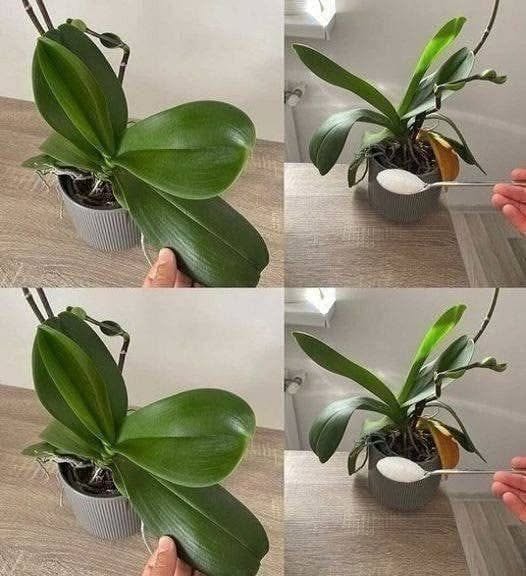
If your orchid suddenly stops blooming or shows yellowing leaves, careful attention to fertilization is crucial. Overfeeding can harm orchid roots and reduce flowering, while light, regular feeding encourages robust growth and blooms.
Distinguishing Orchid Feeding Needs: Too Much vs. Just Right
Many orchid enthusiasts believe that applying more fertilizer will lead to bigger, more frequent blooms. However, this common assumption often backfires because orchid roots are highly sensitive to excess nutrients and salts. Instead of flourishing, orchids exposed to excessive fertilizer may develop burned roots, salt accumulation in their potting medium, and yellowing leaves, all of which hinder flowering.
Before adjusting your fertilization routine, ask yourself: Is my orchid showing signs of stress like leaf discoloration or weak flower spikes? If so, evaluating how much and how often you feed your orchid is essential.
Check Your Medicine Cabinet: Fertilizer Types and Their Impact
Not all fertilizers are created equal. Orchids require a balanced supply of key nutrients—nitrogen (N) for leaf growth, phosphorus (P) for root development and blooming, and potassium (K) for overall plant health. Using a fertilizer formulated specifically for orchids or one with a balanced N-P-K ratio helps avoid nutrient imbalances that can cause damage.
For beginners, a fertilizer with a ratio near 20-20-20 diluted to a quarter or half strength is often recommended. Applying this lightly but regularly supports healthy nutrient absorption without overwhelming the plant.
Why Small, Frequent Doses Are More Effective
Orchid roots absorb nutrients best when they are provided gradually. Heavy, infrequent fertilization can saturate the growing medium, leading to toxic salt buildup that injures roots and impairs water uptake. Conversely, light feeding encourages:
- Steady root growth
- Stronger, greener leaves
- Enhanced energy storage for blooms
- More consistent flower production
Adopting a routine of feeding orchids with a diluted fertilizer solution every 1-2 weeks during active growth phases helps maintain optimal nutrient levels. This approach is more effective and less risky than occasional heavy feeding.
Additional Considerations: Watering and Growing Medium
Proper watering is essential to help orchids utilize fertilizer efficiently. Overwatering or letting water stagnate in the potting medium can exacerbate fertilizer salt buildup. Ensure pots have good drainage and water only when the medium feels dry to the touch.
Regularly flushing the potting medium with plain water every month or two can prevent harmful salt accumulation and keep roots healthy.
Since orchids vary widely in their species-specific needs, adapting fertilization and watering practices accordingly improves outcomes. For example, some orchids require more frequent feeding during their blooming season, while others need a rest period.
Understanding these nuances helps prevent common pitfalls that lead to poor flowering despite good care.
Here are the 10 essential tips for orchid fertilization and care. Number 7 reveals the warning sign most growers overlook — and it can make all the difference in your blooms.