3. Identifying Milia vs Other Skin Bumps
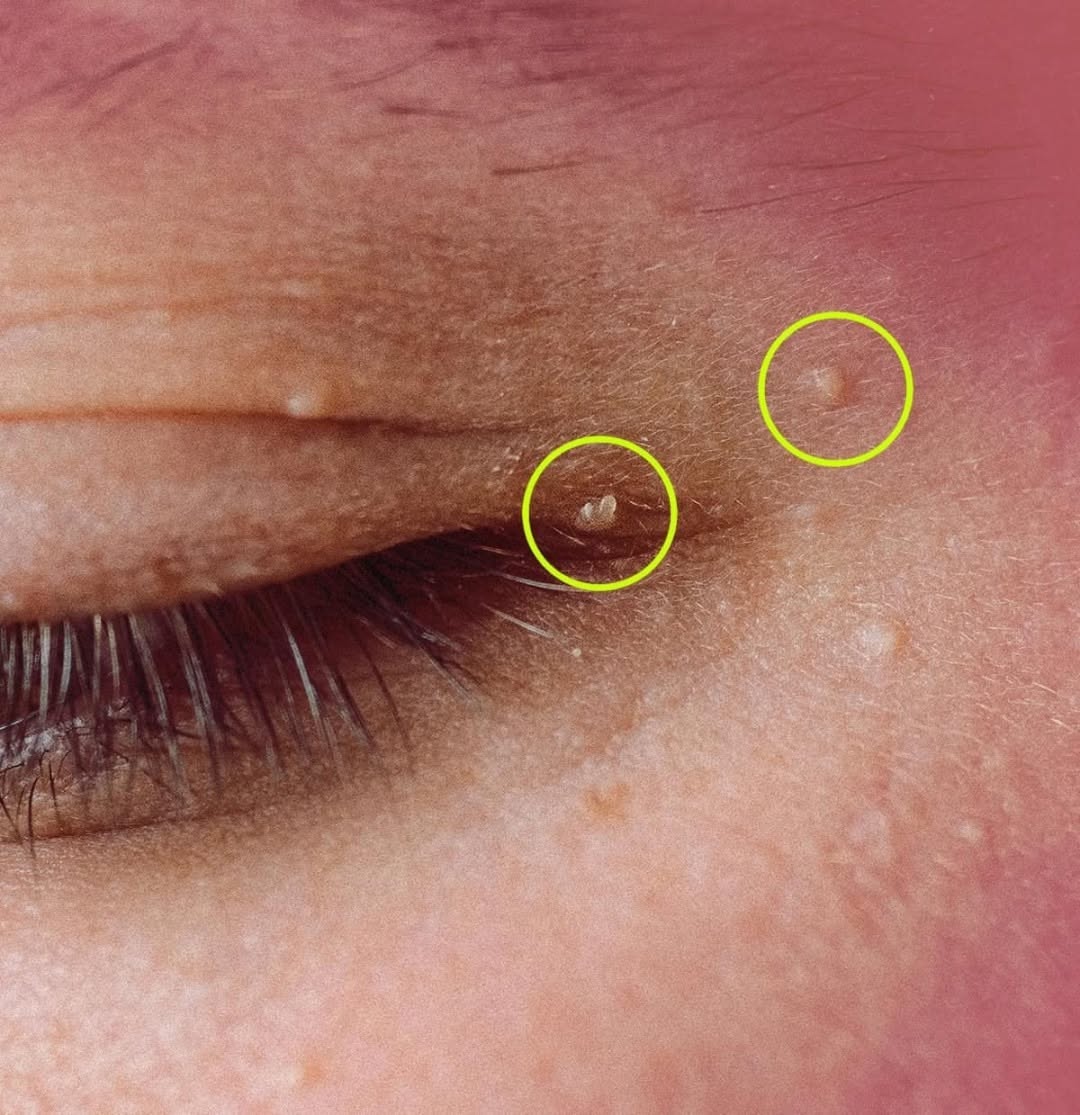
Milia are small, white or yellowish cysts, typically 1 to 2 millimeters in diameter, that form just beneath the surface of the skin. Unlike pimples or acne, milia do not have an inflamed red base and do not contain pus. They feel hard and are usually painless. Common locations include the cheeks, eyelids, nose, and around the eyes.
Distinguishing milia from other skin conditions is important to avoid improper treatment. For example, whiteheads are caused by clogged pores filled with sebum and dead skin cells and can become inflamed. Syringomas, on the other hand, are benign sweat gland tumors presenting as small, flesh-colored bumps. Unlike milia, they do not resolve on their own.
- Milia: Firm, pearl-like bumps, white or yellow, painless, 1–2 mm.
- Whiteheads: Inflamed, may have redness, contain pus.
- Syringomas: Flesh-colored, usually appear around eyes, persistent.
- Keratosis Pilaris: Rough bumps often on arms or thighs, not cystic.
4. When to See a Doctor
Though milia are harmless, certain situations warrant medical evaluation. If the bumps increase rapidly, become inflamed, painful, or show signs of infection, a dermatologist should be consulted. Additionally, if you have an underlying skin condition such as eczema or psoriasis and develop milia, professional advice is recommended to tailor treatment appropriately.
Persistent milia that do not resolve with home care or those appearing after use of new skincare products or medications should also be assessed by a healthcare professional. A dermatologist can confirm the diagnosis and rule out other conditions.
5. Check Your Medications
Some medications can contribute to the formation of milia by affecting skin turnover or causing follicular blockage. Retinoids, corticosteroids, and certain chemotherapeutic agents are known to influence skin cell renewal and may trigger milia in sensitive individuals.
If you notice milia developing after starting a new medication, do not stop the medication without consulting your prescriber. Instead, discuss the skin changes with your healthcare provider, who can determine whether the medication is the cause and recommend possible alternatives or treatments to manage the milia.