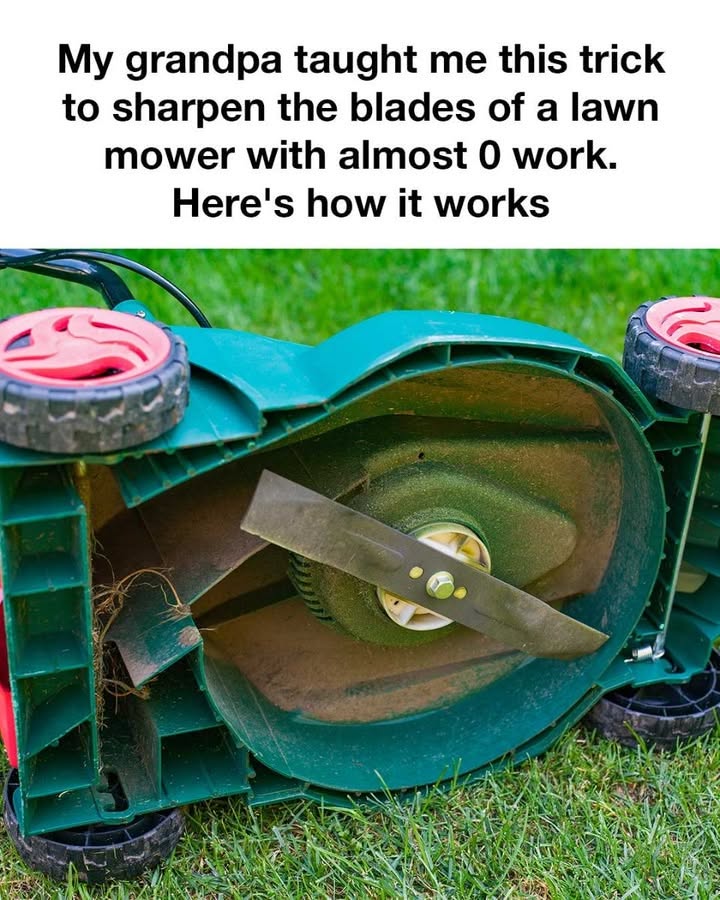
3. Apply lubricant
Before sharpening, apply a light coat of lubricant such as WD-40 to the blade. This helps to loosen any rust and dirt, making the sharpening process smoother and less abrasive on the sandpaper.
Also spray the lubricant onto the strip of sandpaper itself. This reduces friction and prevents the paper from clogging quickly with metal particles. Be sure to wipe away excess lubricant after sharpening to avoid buildup that could attract debris during mowing.
4. Sharpen with sandpaper
Use a coarse grit sandpaper laid flat on a sturdy wooden block. Hold the blade firmly and run the sharp edge against the sandpaper at a consistent angle, mimicking the factory bevel—typically around 30 to 45 degrees.
Sharpen evenly along the entire cutting edge. This process usually takes several passes, about 5 to 10 minutes, depending on how dull the blade is. Avoid using power tools unless you are experienced, as they can remove too much metal or damage the blade if misused.
The goal is a keen, clean edge that will slice grass cleanly without tearing. After sharpening one side, check if the blade requires flipping to maintain balance.
5. Reattach blade securely
Once the blade is sharpened, reinstall it carefully. Align the blade correctly on the mounting shaft, ensuring that the curved side faces the lawn for proper cutting action.
Use the socket wrench to tighten the blade bolt firmly, following the torque specifications in your mower’s manual if available. Over-tightening can strip threads or damage parts, while under-tightening risks the blade coming loose during operation.
Double-check that all washers and hardware are in place and secure before lowering the mower back to its normal position.