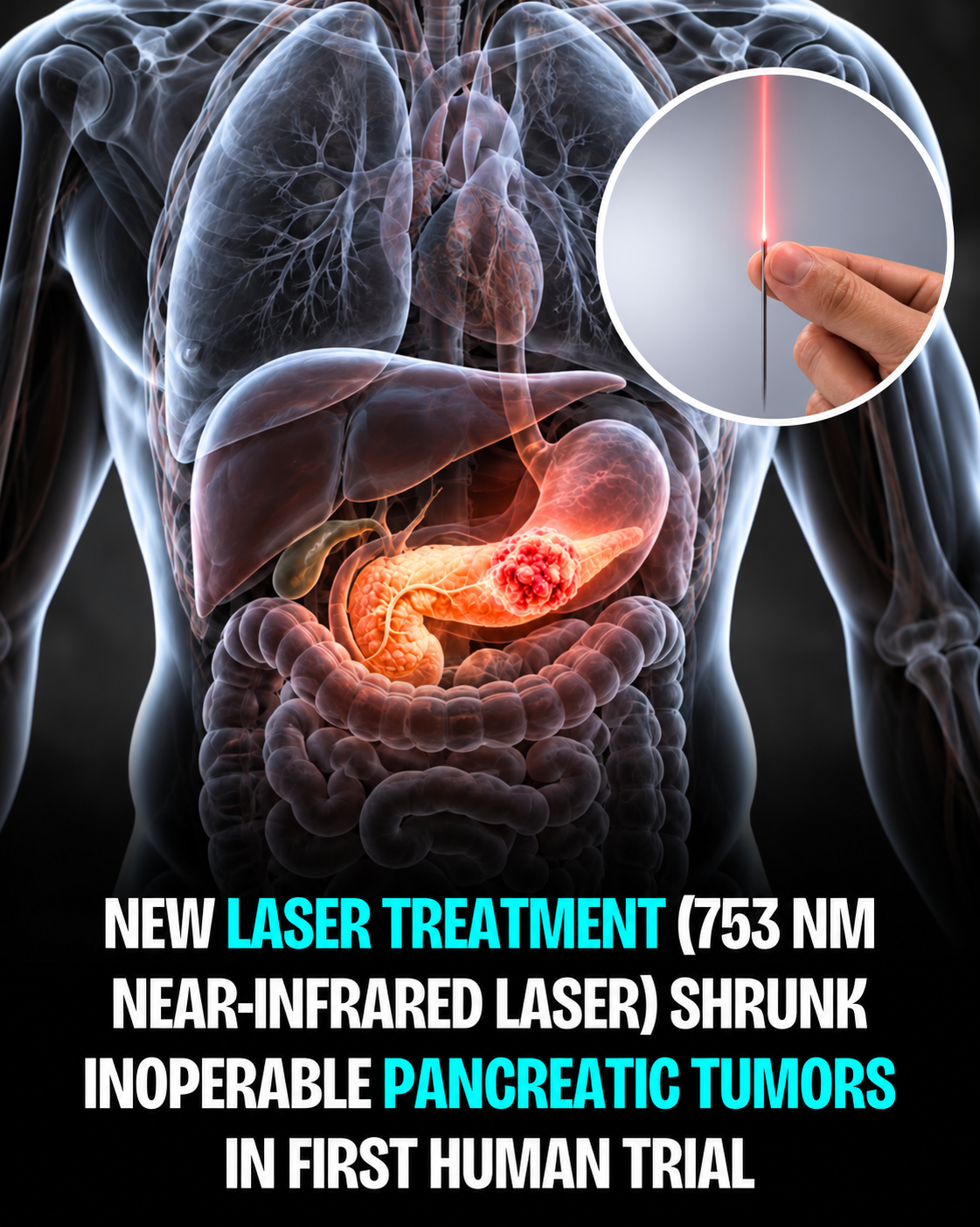
Experimental Light Therapy Could Open a Path to Surgery for Pancreatic Can/cer Patients
An early clinical trial is exploring whether a light-activated treatment can make surgery possible for people with pancreatic tumors involving major arteries. These tumors are often considered inoperable because removing them could damage essential blood vessels.
The experimental approach combines padeliporfin, a drug that responds to light, with a near-infrared laser. After administering the drug, doctors position a small balloon equipped with a laser inside the affected vessel. The laser delivers light at a wavelength of 753 nanometers in two five-minute sessions.
When exposed to the light, padeliporfin triggers a chemical reaction that damages blood vessels supplying the tumor. The aim is to destroy cancerous tissue surrounding the artery, creating an opportunity to remove the remaining tumor surgically. Doctors then wait approximately two weeks before attempting surgery.
The preliminary results described in this first-in-human Phase I trial involve six patients with locally advanced pancreatic cancer that had been considered inoperable. Following treatment, four underwent surgery to remove their remaining tumors. In three of those four cases, examination found no cancer cells at the edges of the removed tissue, known as the surgical margins.