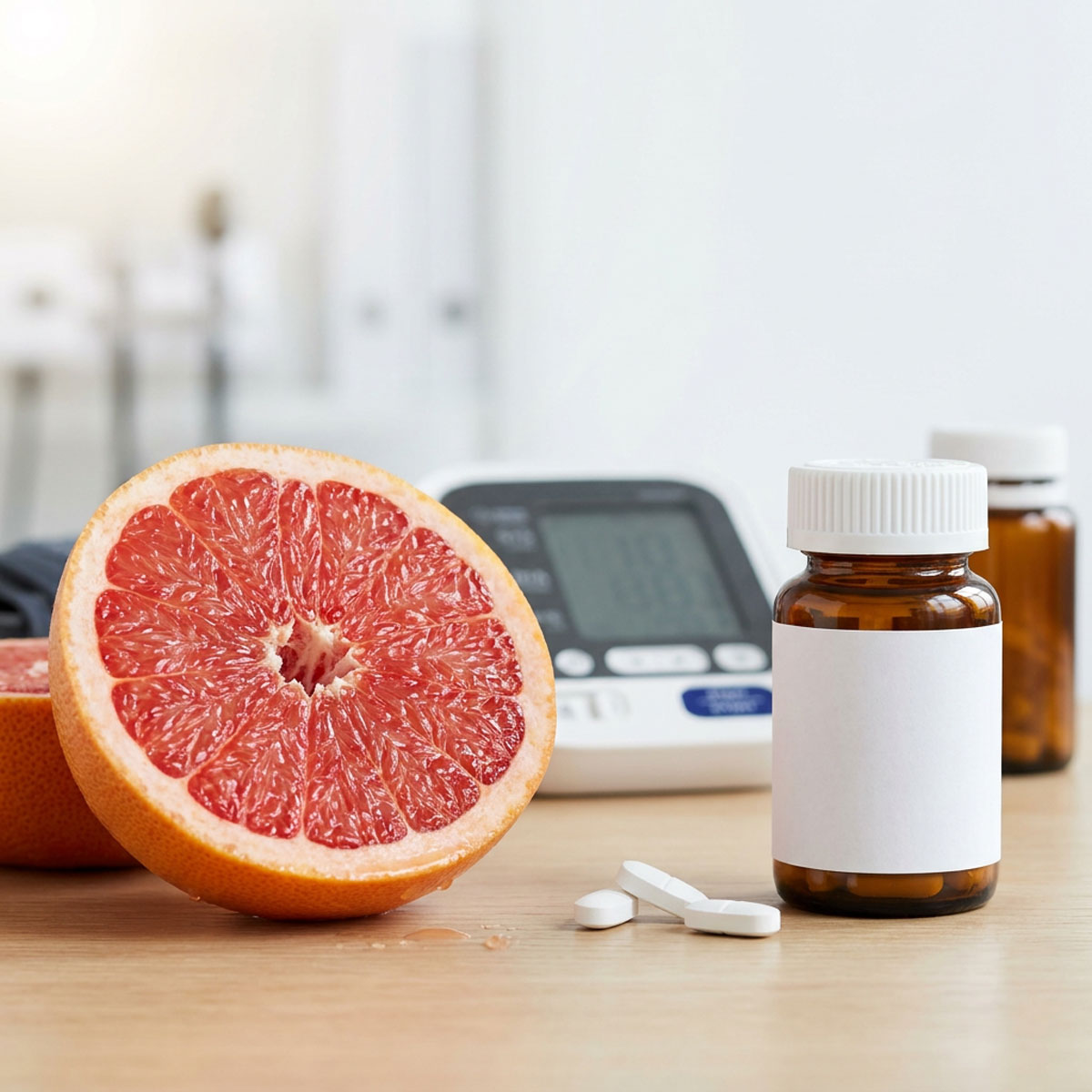
1. How grapefruit affects medication metabolism
Grapefruit contains natural compounds called furanocoumarins that inhibit the enzyme CYP3A4 in the small intestine. This enzyme plays a crucial role in metabolizing many medications before they enter the bloodstream. When grapefruit blocks CYP3A4, less of the medication is broken down, allowing a greater amount to pass into the circulation.
This effect is not due to grapefruit making the medication stronger or the dose changing; rather, it increases the bioavailability of the drug, often beyond what was intended by the prescribing doctor. The result can be amplified therapeutic effects as well as a higher risk of dose-related side effects.
The CYP3A4 inhibition caused by grapefruit is temporary but can last for up to 24 hours or more after consumption. This means even a single glass of grapefruit juice can affect medication levels for an extended period.
2. Medications that increase in effect
Many medications become stronger when taken with grapefruit because their breakdown is inhibited. This can lead to dangerously high blood levels and increase the chance of side effects.
Examples of medications that may increase in effect include:
- Certain statins: Simvastatin, lovastatin, and atorvastatin can reach higher levels, increasing the risk of muscle pain or damage.
- Calcium channel blockers: Drugs like felodipine and nifedipine may cause exaggerated blood pressure lowering, leading to dizziness or fainting.
- Heart rhythm medications: Amiodarone and dronedarone blood concentrations can rise, which may affect heart rhythm stability.
- Sedatives: Medicines such as triazolam and oral midazolam can produce stronger sedation, increasing the risk of excessive drowsiness or respiratory depression.
- Immunosuppressants: Cyclosporine, tacrolimus, and sirolimus require stable blood levels, and grapefruit can cause unpredictable increases that may lead to toxicity.
Because of these risks, healthcare professionals often advise avoiding grapefruit if you are taking these medications or monitoring closely if grapefruit consumption occurs.